


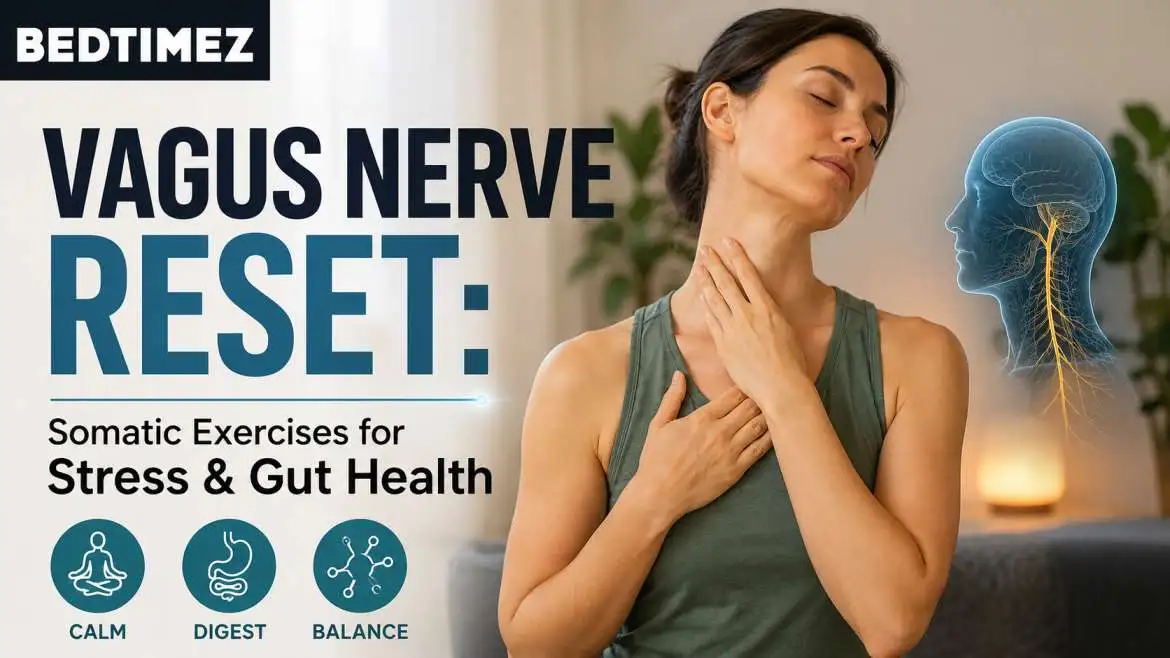
Vagus Nerve Reset: Somatic Exercises for Stress & Gut Health
Stress is a heavy weight. It sits on your chest. It makes your mind run fast. You feel tired but you cannot sleep. You feel angry for no reason. Your stomach hurts. Your neck and shoulders feel hard as rock.
Many people live like this every day. They think this is normal. But it is not. Inside your body, there is a hidden helper. It is called the vagus nerve. This nerve is long. It starts at your brain. It goes down your neck, through your chest, and into your belly. It touches your heart, your lungs, your stomach, and your gut.
When your vagus nerve works well, your body feels safe. When it is not working well, your body stays in fight mode. That is stress.
The good news is you can fix this. You can do simple moves and breathing tricks. These are called vagus nerve exercises for stress. They get on your nerves. They tell your body to rest. They make you feel calm and strong again.
You may also read :- Natural Self-Care Rituals for Mind, Body, and Soul
What Is the Vagus Nerve and Why Does It Matter for Stress?
Let us keep this very simple. Your body has two main modes. One is fight or flight. This mode saves your life when a car comes fast or a dog chases you. Your heart beats fast. Your breath is short. Your blood goes to your legs and arms. You are ready to run or fight.
The other mode is rest and digest. This mode works when you are safe. Your heart beats slowly. Your breath is long. Your body fixes itself. You sleep well. You digest food. You feel calm.
The vagus nerve is the main road for rest and digestion. When this nerve is strong, you switch to calm mode fast. When this nerve is weak, you get stuck in fight mode. That is chronic stress.
Vagus nerve exercises for stress make this nerve stronger. Think of it like a muscle. You exercise a weak arm to make it strong. You exercise a weak vagus nerve to make it calm.
Signs Your Vagus Nerve Is Weak and Stress Is High

Before you start the exercises, check your body. Do you feel any of these?
- Your heart beats fast even when you sit still
- You feel a tight knot in your throat
- Your voice comes out weak or shaky
- You cannot take a deep breath
- Your stomach feels upset after small stress
- You feel dizzy when you stand up
- You have headaches many days
- You feel tired all the time but your mind is wide awake
- You feel fear for no reason
If you have one or more of these, your vagus nerve needs help. The exercises below will help you.
Breathing Exercises for the Vagus Nerve
Breathing is the fastest way to reach your nervous system. Most people breathe from their chest when they are stressed. To stimulate the vagus nerve, you must breathe from your belly.
The 4-7-8 Breathing Technique
The 4-7-8 breathing vagus nerve method is a famous tool for relaxation. It works because the long exhale tells your heart to slow down.
- Sit or lie down comfortably.
- Close your mouth and breathe in quietly through your nose for a count of 4.
- Hold your breath for a count of 7.
- Breathe out completely through your mouth, making a "whoosh" sound, for a count of 8.
- Repeat this four times.
Belly Breathing (Diaphragmatic Breathing)
When your diaphragm (the muscle under your lungs) moves, it physically presses against the vagus nerve. This pressure signals the body to relax. Place one hand on your chest and one on your belly. Breathe so that only the hand on your belly moves.
2. Somatic Exercises for Stress Relief
Somatic exercises focus on the connection between your mind and your body. These somatic exercises for stress relief help "reset" the nervous system by releasing physical tension.
The Basic Exercise (Eye Movements)
This is a very popular vagus nerve reset developed by Stanley Rosenberg. It helps align the top vertebrae in your neck where the vagus nerve passes through.
- Lie on your back.
- Interlace your fingers and place them behind the back of your head.
- Without turning your head, look as far to the right as you can with just your eyes.
- Hold your gaze there until you feel a need to swallow, yawn, or sigh. This usually takes 30 to 60 seconds.
- Bring your eyes back to the center and then look all the way to the left.
- Repeat until you feel another release (yawn or sigh).
The Ear Massage
The vagus nerve has a small branch that reaches the outer ear. By gently massaging this area, you can trigger a relaxation response.
-
Use your pointer finger to gently rub the hollow area just above your ear canal.
-
Move in small circles for 2 minutes.
-
You might feel a sense of calm or a sudden deep breath.
How to Stimulate Vagus Nerve for Anxiety in Real Life
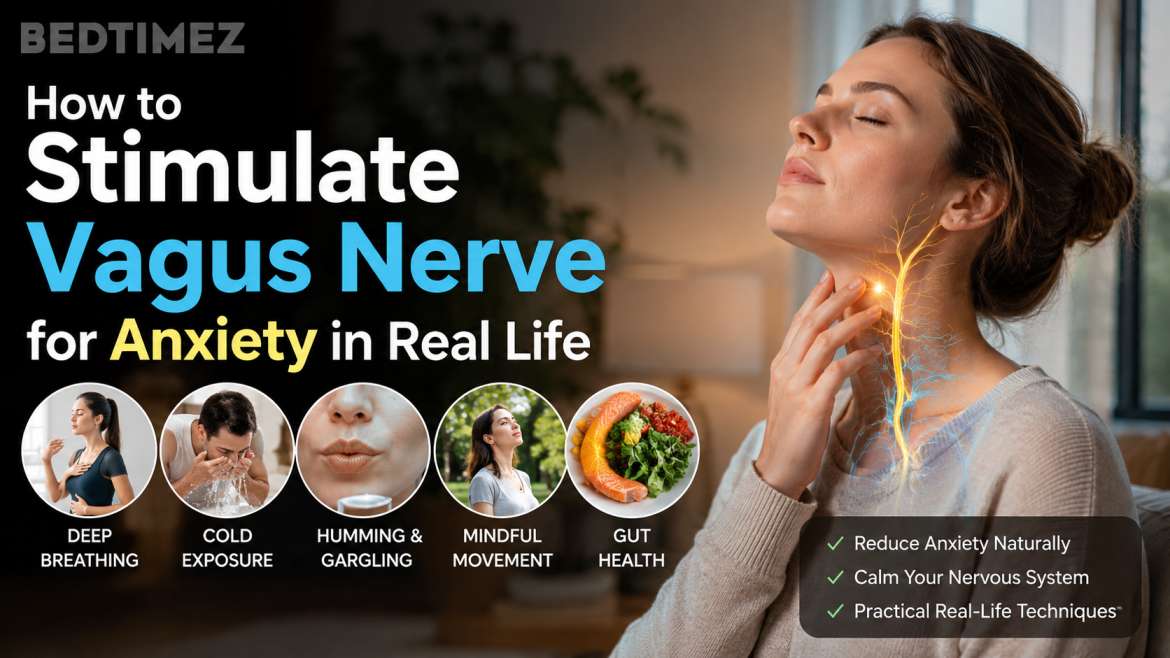
Now you know the exercises. But knowledge is not power. Action is power. You have to do these moves every day.
Do not try to do all of them at once. That is too much. Pick two or three that feel easy. Do them every day for two weeks. Then add one more.
Here is a simple daily plan.
Morning – When you wake up, do the 4-7-8 breathing for four rounds. Then gargle with water five times. Then splash cold water on your face. This takes three minutes.
Afternoon – At lunchtime, do the neck turns for one minute. Then hum for one minute. Then do the belly push for two minutes. This takes four minutes.
Evening – Before bed, do the 4-7-8 breathing again. Then lie on your back and do the belly push for two minutes. Then hum softly until you feel sleepy. This takes five minutes.
That is less than 15 minutes total. But those 15 minutes change your body. Your vagus nerve gets stronger every day. Your stress gets weaker every day.
Nervous System Regulation Techniques That Go with Vagus Exercises
These are not vague exercises. But they help your nerve work better. Use them along with the moves above.
Eat slow—When you chew your food well and eat slow, your vagus nerve gets a signal to start digestion. This is a rest mode signal. Do not eat standing up. Do not eat while watching stressful news. Sit down. Chew. Breathe.
Look at trees—your eyes send signals to your brain. When you look at green trees and open sky, your brain feels safe. When you look at phone screens and small rooms, your brain feels trapped. Go outside. Look far. Look up. Do this for five minutes every day.
Talk slow—When you talk fast, your breath becomes fast. Fast breath means fight mode. Slow your talking down. Take a small breath between sentences. This tells your vagus nerve that you are not in danger.
Yawn on purpose—yawning is a natural vagus nerve reset. Open your mouth wide. Make a big fake yawn. Soon your body will do a real yawn. Do this five times when you feel stress rising.
Touch your face softly—put your hands on your cheeks. Stroke down to your chin. Put your fingers on your closed eyes. Press very softly. Put your hand on your heart. These soft touches tell your nervous system, “I am safe. I am home.”
Vagus Nerve Reset for High Stress Days
Some days are very hard. Your boss yells. Your child cries. You get bad news. On those days, stress is too high for slow breathing. You need a fast vagus nerve reset. Here is a two-minute reset for those days.
Stand up. Shake your hands hard for 10 seconds. Shake your feet. Shake your whole body like a dog shaking off water.
Then take one big breath in. Then let it out with a loud sigh. Do this three times.
Then put cold water on your face or the back of your neck.
Then hum loud for 10 seconds.
Then sit down. Put one hand on your heart and one hand on your belly. Say to yourself, “I am safe right now. This feeling will pass.”
This two-minute reset stops a stress wave before it crashes. Use it any time you feel your body getting tight and hot.
Vagal Toning for Sleep – How to Fix Your Nights
Do you lie in bed with your eyes open? Does your mind run in circles? Do you watch the clock go from 11 to 12 to 1? That is a weak vagus nerve. Your body does not know how to switch to sleep mode.
Do these things one hour before bed. No phone. No computer. No TV. The blue light keeps your brain awake. And the news and videos keep your mind busy. Turn the lights low. Use a small lamp. Dim light tells your brain to make sleep chemicals.
Do the 4-7-8 breathing for eight rounds. Do the humming breath for two minutes. Put one drop of lavender on your pillow. Soft smells rest your nervous system. Lie on your right side. This position helps the vagus nerve work better for digestion and rest. Put one hand under your face. Breathe slow.
Within one week of this night routine, your vagal toning for sleep will get better. You will fall asleep faster. You will stay asleep longer. You will wake up feeling rest.
Daily Routine for Nervous System Regulation
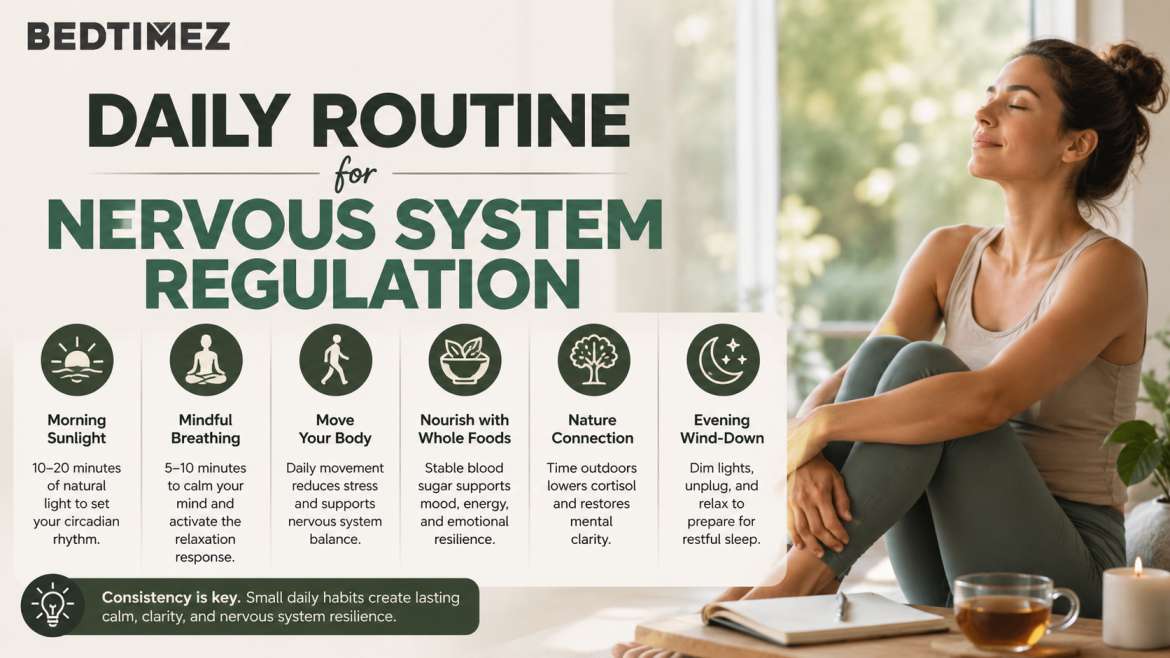
To see real changes in your anxiety levels, you should try to do these exercises every day, not just when you are panicked. Consistency is key to vagal toning.
| Time of Day | Exercise | Benefit |
| Morning | Gargling water & Cold splash | Wakes up the nerve and clears brain fog. |
| Afternoon | 4-7-8 Breathing | Lowers midday work stress. |
| Evening | The Basic Exercise (Eye movements) | Resets the system after a long day. |
| Before Bed | "Voo" humming or foot massage | Prepares the body for deep sleep. |
Final Words – You Can Change Your Stress
Most people think stress is just in the head. They try to think positive. They tell themselves to relax. That does not work because stress lives in the body.
Your vagus nerve is the bridge between your body and your brain. When you do vagus nerve exercises for stress, you change your body. When your body feels safe, your mind follows.
You do not need to be perfect. You do not need to do every move. Just start with one. Do the 4-7-8 breathing right now. Do it once. Then do it again at night. Then add cold water tomorrow.
Small steps. Every day. That is how you build a strong vagus nerve. That is how you take your life back from stress.