


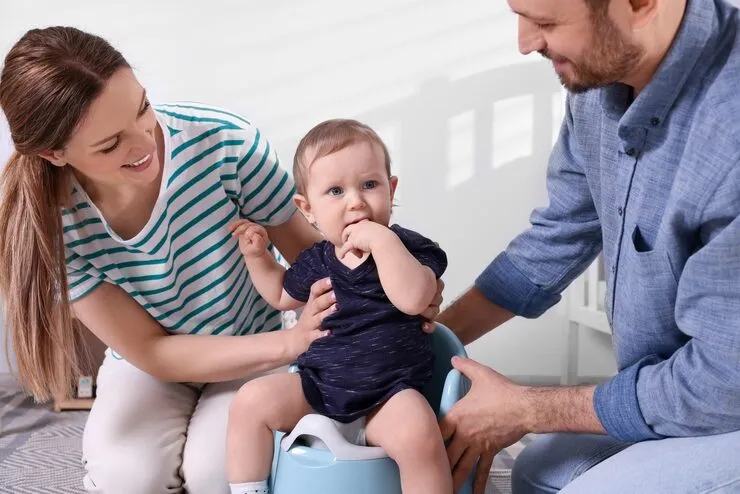
Parenting Tips Every First-Time Mom Needs
Bringing your baby home is a moment you will never forget. I remember sitting on the couch, staring at this tiny human, and thinking, "They are just letting me leave the hospital with him? I don't know what I'm doing!" If that sounds familiar, you are in the right place.
After navigating the chaos and joy of my first year, I’ve gathered some essential parenting tips for first-time moms that go beyond the usual baby books. These are the real, honest strategies that helped me survive and actually enjoy motherhood. Forget the pressure to be perfect; let’s focus on what really works for you and your little one.
Parenting Tips for First-Time Moms: Ditch the Perfect Mom Myth
At this moment, you may think that you have to possess all the answers. Social media does not assist, does it? You also get to see images of perfect households and mothers who come out of a magazine cover just after having strolled out of the store and their baby cries happily. I felt that pressure, too.
This is what I needed to discover: the ideal mom is a myth. Indeed, as the therapist Helen Hazell-English says, it is vital to the development of children to be disappointed at least once in their lives so that they can also be able to build their own character.
Why Letting Go of Control Helps Everyone
As soon as I gave up trying to be perfect, I began to really like my son. I knew that it was not in a clean floor or a neatly folded onesie. It is in the manner he laughs when I make funny faces. When you are feeling overwhelmed, then you should lower the bar, not work harder.
You may also read :- How to Take Care of a Baby at Home
How to Ignore the Momfluencers
My social media needed a major cleaning up. When an account had me feeling bad about my decision—be it between formula feeding and breastfeeding or sleep training—I swapped that unfollow button with a tap of the finger. Pay attention to the accounts that make you feel relaxed and fun, but not to the ones that make you feel as though you are in a competition with the edited model of your life.
Newborn Parenting Tips for First-Time Moms

The initial weeks are a lovely hazy view of changing diapers and midnight feedings. It is also when you must need the most grace. We should dissect the way to manage the most challenging part: the exhaustion.
"Sleep When the Baby Sleeps" and Other Realistic Advice
And everybody says this, and I would roll my eyes. How am I expected to sleep when the dishwasher has to be emptied, and I have not had anything but a cold toast? However, a new mother and herself a pediatrician, Dr. Radhini Bell, tells us that even sanity is at a high price at this period.
I began to take micro-rests as opposed to imposing a nap. Sometimes, all I could do was to sit on the porch and have five minutes of coffee, and the baby napped in the swing next to me. It is not a deep sleep but a moment to build up your energy.
The "Good Enough" House Rule
Most days my house was the toy explosion. And you know what? It was fine. It is better to live in a good enough house because it will save your mental health. Clothes, which have been unfolded, are clean. A heap of crumbs on the floor only indicates that you have a family living there.
Essential Health and Safety Guide for New Moms
Once you are sleep deprived, the slightest sniffle or cry of a baby could get you into a frenzy. The knowledge of the fundamentals made me feel more in control.
Understanding Baby Poop and Fevers
Yes, we have to talk about poop! Dr. The best piece of advice comes with Bell: Infant constipation is not about frequency; it is about consistency. There are those babies who poop after each feed and those that poop after every three days. They are both normal provided that the stool is soft and mushy, such as peanut butter.
About fevers, always think to cure the child and not the figure. And in case your baby has a light temperature, but he is smiling and playing, he may be fine. However, when they are not eating and miserable, then you call the doctor.
Creating a Safe Sleep Environment
This is non-negotiable. I understand how hard it is to take that cute baby and have a cuddling session with them, at least once in a bed. However, to minimize the chances of Sudden Infant Death Syndrome (SIDS), the child should be on his or her back in a safe sleeping place.
The crib must be dull; no loose blankets, stuffies, or bumpers. According to the American Academy of Pediatrics, they advise the room but not bed-sharing at least during the first six months of baby development.
The Visitor Rule
Once you are home, the first thing everyone wants is to meet the baby. Infants possess weak immune systems. It is okay to be the "bad guy." I was taught how to establish limits prior to visitors coming. Wash your hands, no kissing the baby (unless it is the top of the head or feet; it is all right), and do not bother to go when you are ailing. Your first business is to guard that newborn cocoon.
Feeding Your Baby: A Parenting Tip for First-Time Moms
There are not many subjects that cause as much anxiety as feeding. Breastfeeding, formula feeding, or both, the objective is the same: a fed baby and a sane mommy.
Breastfeeding Struggles Are Normal
In case breastfeeding is painful or is not going fine, you are not alone. Dr. Bell confessed that as a pediatrician, she experienced many emotional and psychological problems with nursing. Both of you take several weeks to acquire this new skill. Don't consider your bad feeding session as your only limitation. If you need help, ask for it! Magic workers are lactation consultants.
It’s Okay to Use Formula
This was a big one for me. I was going to breastfeed, but everything did not go in that manner. I was a failure until a prudent nurse informed me that a fed baby is a healthy baby. It is not anything to be ashamed of to have a discussion with your pediatrician about pumping, supplementing, or switching to formula. The formula is a scientific miracle that enables babies to survive. Full stop.
Managing the Rollercoaster
You are experiencing enormous changes in your body, and you are all hormone crazy. There is nothing wrong with crying without cause. It’s normal to feel anxious.
Baby Blues vs. Postpartum Depression
The baby blues occur in the first few days in many women. You may feel depressed, or cry, or just feel overwhelmed. This normally subsides within two weeks. Nevertheless, in case these emotions persist over time or are intense, or even when you are indifferent to your offspring, you should contact your physician immediately. Postpartum is a severe health disorder, and it is curable. And that you need help is no weakness of yours; it is strength when you get it.
How to Ask for Help (The Specific Ask)
It is always, "Let me know in case you need anything!" However, first-time moms are not always sure of what to request. Therapist Sharon Breen invites new mothers to get in touch with her the moment they feel that they are not doing well. Keep a list of "asks" handy:
- Give birth to the baby, and I will shower.
- Would you go to the shop and get some diapers and wipes?
- Would you please do some of that laundry, and we can talk?
- Friends find it much easier to deal with specific requests.
Social Tips for New Parents
Parenting is lonely when you make it that way. This is not something that we are supposed to do all by ourselves.
Finding Your Mom Tribe
The most surprising place that I have made my best mom friends was a library story time. The local parent groups, community centers, and even apps such as Peanut are excellent when it comes to meeting other moms in the very same marathon of sleeplessness as yourself. It is a savior to have someone to make a call at 3 AM and have that individual understand how you can be feeling.
Navigating Your Relationship with Your Partner
The birth of a baby alters your relationship with the partner. You are both tired. The trifles may become major battles. My husband and I began to do some check-ins. We'd rate our day from 1 to 10. In case he said 3 and I said 8, we understood that we should be easy on each other. There are little, low-energy links that can realign your entire mood, such as a 30-second hug.
Conclusion: You Are the Best Mom for Your Baby
Of everything you take away from these parenting tips for first-time moms, take this one: you are just what your baby wants. They do not require an ideal parent; they require a current one. They want you—you stink of sputum, you have bags under your eyes, etc. Be as nice to yourself as you are to your best friend. You’re doing a great job. Now, have your coffee (even when it is cold) and eat up those slumbering cuddles. You’ve got this.
Frequently Asked Questions
Q: What is the frequency of my newborn in terms of bathing?
A: You do not have to bathe them daily! Twice or thrice a week is okay within the first year. Baths made more often can dry up their tender skin. Stick to sponge baths until the umbilical cord stump drops off (10 days to 3 weeks).
Q: Is it normal to have my baby strain and turn red when he poops?
A: Yes! This is very common. Infants are in the process of training the abdominal muscles and at the same time relaxing the anal sphincter. They are not constipated as long as the poop is soft (not in hard pellets).
Q: My baby won't stop crying. What should I do?
A: To begin with, you need to know that all infants cry, and this gets worse when they are at 6-8 weeks. Check the fundamentals: Is he or she hungry? Wet? Too hot or cold? Attempt swaddling, shushing, rocking, or pacifiers.
Never, ever shake your baby, however, is the greatest rule. When frustrated, it is not wrong to place the baby safely in his/her crib and go out to take a 5-10 minute break. This is no failure; this is safety.
Q: When can I expect my baby to sleep at night?
A: That is the million-dollar question! Though all the babies are not the same, most of them begin to sleep more frequently (6-8 hours) at the age of 3-4 months. A regular bedtime routine and putting them in their own crib on their backs should serve as incentives to do this.